Monday, February 3, 2014

oh! What a surprise!

5,000 schools register no candidate in first grade

SHARE BOOKMARKPRINTRATING
Uneb chairman Fagil Mandy hands over the 2013 PLE results to Education minister Jessica Alupo last week. PHOTO BY FAISWAL KASIRYE 
By PATIENCE AHIMBISIBWE

Posted  Monday, February 3  2014 at  02:00
IN SUMMARY
Proper teaching. An analysis of the results released by UNEB last week shows that schools in urban areasscored highest.
SHARE THIS STORY
 
  0
Share
KAMPALA.
A total of 5,022 primary schools registered nocandidate with first grade in the just released Primary Leaving Examinations. According to an analysis of the results released by Uneb on Friday last week, the schools were a host to 190,050 pupils which is 32 per cent of the total number of candidates in the country.
These were part of the 582,085 candidates from 11,506 centres (schools) who registered with Uneb to do PLE in 2013. 
This means almost half of the schools representing 43.6 per cent of the primary schools which registered with the examining body last year didn’t get a score in first grade, which has the country’s best performers.
The analysis further shows that of these, 457,071 schools were under Universal Primary Education and only 494,839 pupils passed the exams.
According to Uneb executive secretaryMathew Bukenya, candidates who appear between Divisions 1,2,3 and 4 are deemed to have passed and eligible to join any post-primary education.
There were 9.4 per cent candidates who scored Division One, Division Two had the highest number (44.2 per cent), 22.3 per cent appeared in Division Three while Division Four had 12.2 per cent.
At least 15.3 per cent of the candidates either failed or didn’t show up for the examinations after they had registered with Uneb.
The analysis shows that Kabale District had more schools (181) with no pupil in first grade, followed by Apac with 165 schools, Kasese (137), Yumbe (131), Iganga 126, Rakai (123) while Kibaale and Tororo tied at 116 and Luweero got 109.
Urban schools performed better than their counterparts in rural schools. For instance, Kampala’s Kabojja Junior PS and Masaka’s Bright Grammar PS had all their candidates in Division One. 
Ms Jessica Alupo, minister of Education and Sports, attributed the good performance in urban schools to availability of facilities and less pupil and teacher absenteeism.
“Some schools are from hard to reach areas where teachers although government has posted them there, turn down the offer,” Ms Alupo said. 
“In such schools, pupils learn with no qualified teachers. The government is committed to enhance teachers capacity to deliver quality teaching and learning by training teachers in early grade literacy and numeracy.”
She urged district officials where performance wasn’t impressive to increase their inspection activities for better results.
pahimbisibwe@ug.nationmeia.com

It is possible to Work with World Bank!

WHERE DOES RESEARCH FIT INTO JIM KIM'S 'SOLUTIONS BANK'?

Posted by Paul Stephens on 03 February 2014 04:08:26 AM
 Share
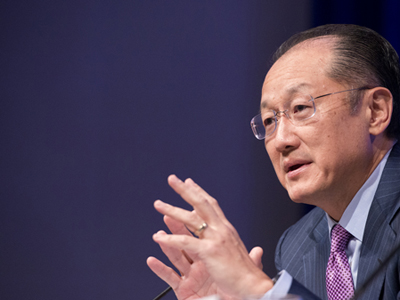
World Bank President Jim Yong Kim
World Bank President Jim Yong Kim. How will Kim's plan to reshape the financial institution affect research teams? Photo by: Ryan Rayburn / World Bank / CC BY-NC-ND
An important part of World Bank President Jim Kim’s plan to remake the Washington, D.C.-based institution is to change how the the institution uses, manages, and disseminates knowledge.

This so-called “global practices” model is intended to help bank staff apply their technical knowledge more fluidly across countries and regions.


But how will the changes affect research teams, as the shift toward more evidence-based policy and analysis could entail a bigger operational role for research? Andrew Burns, senior economist at the World Bank and lead author of the World Economic Prospects Report, gave us some interesting insights.

“It … means a sort of obligation on the part of research to be more operationally relevant.” he explained. “And you know, those are tricky things to actually make happen because often times, what’s operationally relevant is difficult to get an economically robust result for and that of course is a source of frustration for people working on the ground and equally a source of frustration for the researchers who are actually trying to expand the walls of knowledge.”

Burns said he was “relatively optimistic” that the global practices would concentrate the bank’s practical knowledge and provide an opportunity to improve communication between the operational and research sides of the bank, although he thinks some natural tension will likely remain.

“Policy makers do have to act, and they do have to implement policies in the areas where the knowledge is imperfect, and what researchers are concerned about is being asked to draw stronger conclusions than their research will support.” he said. “I think that’s a healthy tension.”

The World Bank’s operating budget for the next fiscal year will reveal how much bigger a role the research teams will play in the bank’s redesigned business model. It will also show if the global practices themselves will receive allocations for knowledge synthesis and creation independent from the multi-donor trust funds that often drive such initiatives.

Read more development aid news online, and subscribe to The Development Newswire to receive top international development headlines from the world’s leading donors, news sources and opinion leaders — emailed to you FREE every business day.

See more:

Tags: global practices, research, Andres Burns, Jim Kim, World Bank
Share on delicious del.icio.usShare on digg DiggShare on facebook FacebookShare on linkedin LinkedInShare on stumbleupon StumbleUponShare on twitter TwitterGoogle+
Paul-stephens_400x400_thumb
Paul Stephens is a Devex staff writer based in Washington, D.C. His coverage focuses on Latin America and World Bank affairs, as well as Washington's global development scene. As a multimedia journalist, editor and producer, Paul has contributed to the Los Angeles Times, Washington Monthly, CBS Evening News, GlobalPost and the United Nations magazine, among other outlets. He's won a grant from the Pulitzer Center on Crisis Reporting for a 5-month, in-depth reporting project in Yemen after two stints in Georgia - one as a Peace Corps volunteer and another as a communications coordinator for the U.S. Agency for International Development.

Understanding US Foreign/Development Policy through USAID mission Statement

DEVELOPMENT BUZZ

USAID's new mission: Why it matters

 Share
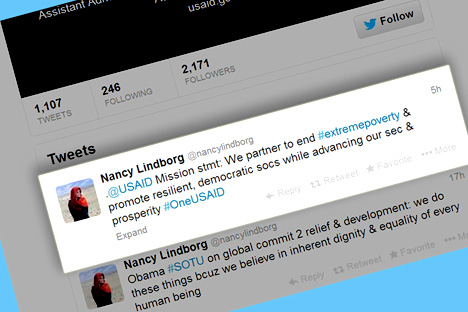
Nancy Lindborg's tweet on USAID's new mission statement
Nancy Lindborg tweets about USAID's new mission statement. USAID's new mission statement puts into words a sense of what the agency as a whole is meant to be doing: purusue the goal to end extreme poverty by 2030 Photo by: Devex
The U.S. Agency for International Development launched a brand new mission statement Wednesday. It’s the latest move by USAID to reconcile limited resources with ambitious goals, and it’s in line with an international donor landscape more focused on achieving results than on funding projects in perpetuity.

Now, when asked what they do for a living, U.S. development professionals stationed in South Sudan, Georgia and Cambodia, or at headquarters in Washington, can all answer:

“We partner to end extreme poverty and promote resilient, democratic societies while advancing our security and prosperity.”

Is USAID’s new mission statement wide open for interpretation? Sure. Is it chock-full of development buzzwords that are exceedingly difficult to define let alone measure? Absolutely.

But with it, the Obama administration is enshrining its new ambitious goal to end extreme poverty (by 2030) into its lead aid agency’s mission. It is also incorporating several themes from the emerging U.N.-led post-2015 global framework such as inclusive growth, resilience and the importance of peace, democracy, and security to development — drawing on lessons from the Arab Spring as well as droughts and other recent disasters in the Horn of Africa, Sahel and Philippines.

Even if the statement seems designed to please everyone, by putting into words a sense of what the agency as a whole is meant to be doing — and by arriving at those words through consultation with over 2,600 agency staff and partners around the world — USAID’s leadership has taken a step towards legitimizing and defining the role of the development professional in executing U.S. foreign policy.

Here’s why words matter in this case.

The new mission statement replaces this: “On behalf of the American people, USAID is helping to accelerate human progress around the world by reducing poverty, advancing democracy, empowering women, building market economies, promoting security, responding to crises, and improving the quality of life through investments in health, agriculture, and education.”

It read like a laundry list of initiatives, and many USAID staff members suffer from initiative fatigue. They’ve said so in internal surveys and they’ve raised the issue during town halls and panel discussions.

But initiatives are an effective means to secure funding from congressional appropriators, even if they do lock that funding into silos and, perhaps, reduce flexibility. Initiatives — like PEPFAR, Feed the Future and Power Africa — can be championed in ways that a general sense of “doing good” cannot. Initiatives turn abstract goodwill into something concrete and fundable.

Is USAID to implement — or contract — a series of ad-hoc programs, loosely bound by their general contribution towards doing good, yet bogged-down by bureaucratic box-checking and subject to the personal interests of powerful lawmakers and unpredictable turns of geopolitical strategy?

Or, does USAID invigorate and empower its staff to analyze challenges and promote change through innovative partnerships and other means, with a common goal in mind?

The old mission statement was framed around a list of activities that USAID does. The new mission statement is framed around the aspirational end goal that USAID and its partners are working toward.

In the 1990s, USAID came close to disappearing. The agency saw huge budget cuts that stripped away much of its expertise and institutional knowledge. The attacks on Sept. 11, 2001, prompted funding to flood back into foreign affairs — to help “win the hearts and minds” of the Afghan people, among other things.

President Barack Obama’s Development Leadership Initiative sought to double the number of USAID Foreign Service Officers and Administrator Rajiv Shah has expressed his desire to “recentralize” past expertise and decision-making. Some of his efforts to do so, like requiring his personal approval for large funding awards, have turned heads among the agency’s implementing partners.

USAID’s workforce is larger and younger than it has been for a long time, and has been rebuilt under the auspices of Obama’s 2010 presidential policy directive to reposition development as a branch, not a servant, of U.S. foreign policy.

With the Afghan transition supposedly underway and USAID’s role in stabilization and reconstruction efforts poised to wind down over the next few years, it is even more critical for the U.S. government’s development enterprise to assert itself as a “premier” agency dedicated to resourcing civilian power so it can accomplish an articulable mission.

In December, I wrote a ”New Year’s Resolution for U.S. Aid,” suggesting agency leaders use the occasion of the second Quadrennial Development and Diplomacy Review – which is currently underway — to more clearly articulate the role of the “development professional” in U.S. foreign policy. USAID’s new mission statement is a step in that direction.

Part of my reason was that foreign assistance is wildly misunderstood by the “average American,” who overestimates U.S. spending levels by 20 times or more and yet, according to some surveys, thinks we should spend more on foreign assistance. (At the same time, when asked how to cut the federal budget and reduce the deficit, foreign aid tends to be among the most popular responses.)

The miscalculation — or total disconnect — seems less to do with innumeracy and more to do with a general lack of clarity about what U.S. foreign aid does. Development professionals lack the sort of professional identity enjoyed by diplomats and military personnel; it is incumbent on the international development community to articulate that identity if it wants a seat at the table where big international decisions are made.

Obviously, a mission statement alone is not enough. So I am encouraged to hear about efforts like the Administrator’s Leadership Council management system, a new open-access, internal database to catalogue all of USAID’s various initiatives in a way that tracks their respective contributions to a common set of extreme poverty-related goals to help determine where funding can be most effective.

The next step for the agency’s leadership is more clearly talking about and showing what it won’t do. For a mission statement to have teeth, it has to serve as a useful benchmark for difficult decisions about where and how to spend money and locate people around the world; and whether or not USAID has the leadership empowered to make those decisions is still a wide open question.

We know that extreme poverty will increasingly exist in fragile and conflict-affected states; and we know these are the most difficult environments in which to administer high-quality and highly-accountable programs.

USAID is getting closer to giving a name and unique mission to the type of professional who forges partnerships that can ease poverty and help build democratic institutions under those challenging conditions. USAID’s mission is still messy. But now the professionals tasked with carrying it out can better explain, and defend, what they’ve signed up for.

Join the Devex community and access more in-depth analysis, breaking news and business advice — and a host of other services — on international development, humanitarian aid and global health.

Share on delicious del.icio.usShare on digg DiggShare on facebook FacebookShare on linkedin LinkedInShare on stumbleupon StumbleUponShare on twitter TwitterGoogle+
Michael-igoe_400x400_thumb
Michael Igoe
Michael Igoe is a Global Development Reporter for Devex. Based in Washington, he covers US foreign aid and emerging trends in international development and humanitarian policy. Michael draws on his experience as both a journalist and international development practitioner in Central Asia to develop stories from an insider's perspective.

Donors & Foreign aid workers need to work with Diasporas too!

CONTRIBUTOR: JOE CERRELL

It's our responsibility to #stopthemyth on foreign aid

 Share6
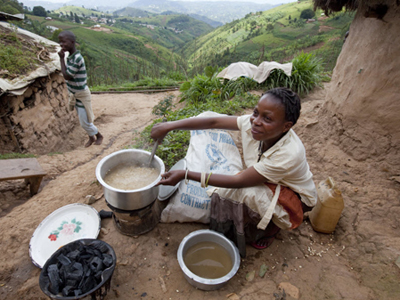
Nikuze Aziza at the Kiziba camp in Rwanda
Foreign aid helps refugees like Nikuze Aziza at the Kiziba camp in Rwanda feed their families and stay healthy. Photo by: Gates Foundation
Two weeks ago, Bill and Melinda Gates released their annual letter for 2014. I was excited to see it focus ondebunking persistent myths in development aid, and it got me thinking about the myths I’ve encountered working in advocacy, government relations and communications at the Gates Foundation for the past decade.

One constant refrain about aid that I’ve heard — particularly in more recent years living in Europe — is this: “We have to choose between helping the poor here at home and helping the poor abroad.”

The truth is that framing the discussion in these terms poses a false choice, that if we only cut off resources for overseas aid programs, we could fix our domestic financial challenges at home. The truth is that the amount of assistance provided to poor countries is a tiny fraction of national budgets, contrary to prevailing public opinion. We all share a common interest in ensuring continued support for both programs at home and internationally.

Huge return on small investment

Let’s be clear — funding support for domestic issues comes first, and it always has. Take the United Kingdom for example, one of the largest aid donors in the world. In 2012, the combined expenditure for many of the biggest domestic social programs (pensions, welfare and health care) accounted for more than 50 percent of the U.K. annual budget, while the amount spent on overseas aid by contrast is less than 1 percent. This general proportion of spending is the same for all major aid donors, including the United States.

When you then see what relatively small investments can lead to — including expanded immunization coverage, declines in chronic hunger amongst children and big gains in agriculture productivity — the case for foreign aid is undeniable.

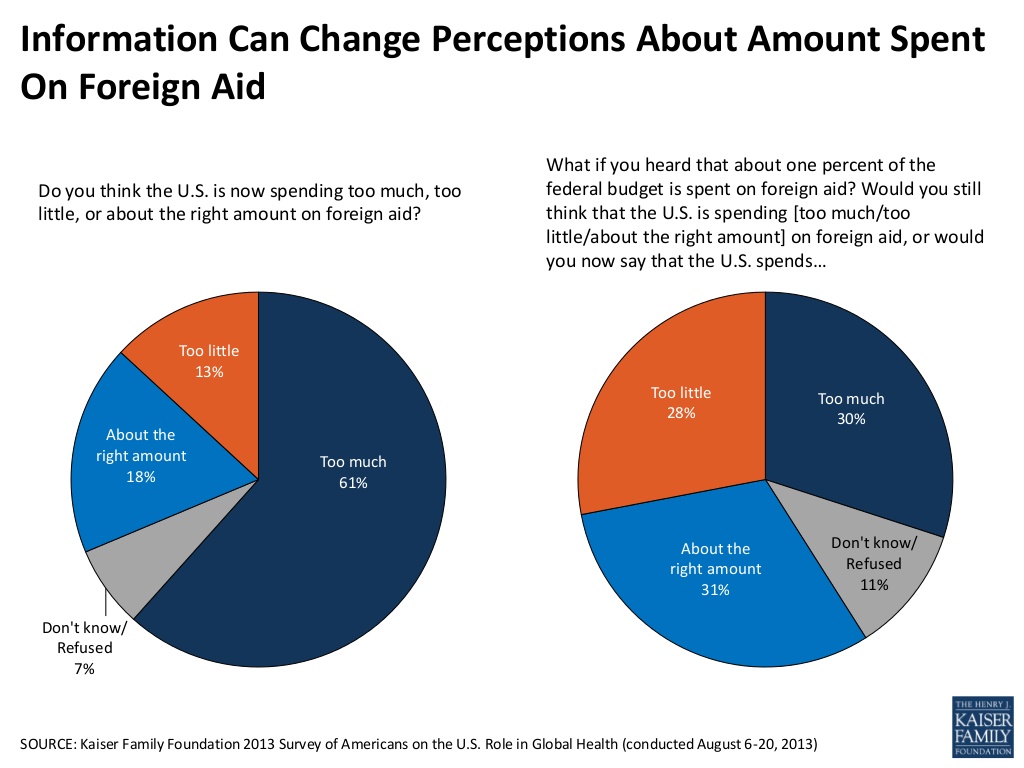
Why then does this myth persist? The biggest reason is that so few people are aware of how little is spent on overseas aid and the great impact it is having. A recent survey from the Kaiser Family Foundation found that most Americans believe that 28 percent of the U.S. budget goes to foreign aid. The same survey also showed that when people understood that aid was only about 1 percent of the budget, they were much more supportive of maintaining and even increasing the amount.

Click on the image to view larger version.

The bottom line

Quite simply, if 1 percent of the budget was redirected back to domestic issues in a donor country, it would only be a drop in the bucket — but invested in the developing world, it is helping to spur historic progress and prosperity.

As Bill and Melinda Gates pointed out, by many measures the world is better today than it has ever been. Upwards of a billion people have lifted themselves out of poverty; many countries that used to be recipients of aid are now self-sufficient, and some have become emerging donors.

What this says to me is that if more people knew what is undeniably true — that aid is a small piece of the budget and that it works — they would support it. We need to do a better job sharing the success stories and each of us has a shared responsibility to help #stopthemyth.

Join the Devex community and access more in-depth analysis, breaking news and business advice — and a host of other services — on international development, humanitarian aid and global health.

Am sure there will come a time when we can provide value for money accountability that is not questionable. I am part of Diaspora Africans. I am bent on developing myself and working hand in hand with people ready to engage in global development, be it Africa or elsewhere. There are challenges tied to foreign aid withoout doubt but they are surmountable. I believe soon we shall read statements such as: "amount of say, USD was sent to country X to help strengthen that country's health delivery structures, with an initial boost of five years. After five years, Y health workers were trained and achieved a good understanding of standard of care protocols; Z health facilities were rehabilitated;community based peer health-mobilizers were trained to encourage communities continue with best hygiene practices; it was possible to get feed back from rural and far flung communities to the central government and vice versa." This is what I know Bill & Melinda Gates, various development partners and people like me are engaged in and want to see others do. In increasing on list of peers, donors and development partners should work with those of us in the Diaspora too.

Saturday, February 1, 2014

Tracing Ugandan School performance for the past 17 years!

This link has more: http://www.monitor.co.ug/News/Education/Tracing-performance-for-the-past-17-years/-/688336/2168656/-/dtgwh8z/-/index.html
Kampala
Since its introduction in 1997, UniversalPrimary Education (UPE) has attracted the highest pupil enrolment in the country from 3.1 million in 1996 to 7.6 million by 2003.

The current enrolment is estimated at 8 million pupils and the government spends more than Shs6.5b annually on the scheme.
The surging enrollment is attributed to the scrapping of tuition fees, population growth and realisation of need for education. UPE has been characterised with high failure anddropout rates with some parents calling the scheme a waste of time since majority of pupils fail literacy and numeracy tests of their class level.
A survey in 2012 by Uwezo, an East African initiative that compiles quality assurance andmanagement support in the region, indicated that pupils in Primary Three “only one out of 10 have Primary Two level literacy and numeracy skills. By the time they reach Primary 7, two out of 10 children have not mastered these skills”.

However, Education minister Jessica Alupodisputed the findings and instead attributes the poor primary performance to teachers who only concentrate on P.7 Seven pupils.
A government probe in 2012 indicated thatcorruption and absenteeism were among the causes of UPE poor performance. Mr IssaMatovu, an education expert, however, says, the scheme was laid on a wrong foundation since it was defused with politics, thus resulting into policy disorientation.
Mr Matovu also said the programme was poorly communicated and rushed without equipping the stakeholders with skills to enable them handle the programme. 

“Why do you think my rural school I went to was performing well then but now with good infrastructure, it is performing worse?’’ he asks 
“The government communication was wrong. It conveyed a message as if the children now belonged to government and not parents. That is why many parents refer to them as government children,” he added.
The Uwezo report indicated poor UPE performances, were also ranked the poorest in the country by the 2011/12 Uganda Bureau of Statistics poverty prevalence survey. At the release of UPE results yesterday, Ms Alupo urged leaders of districts to place more emphasis on supporting supervision of pupils and schools for better results. She also the government would improve working conditions of teachers like increasing salaries, housing and among others.